
In life, we often meet toxic people who drain our energy and undermine our well-being. If you’re in a toxic relationship where someone’s behavior feels too much to handle, you’re not alone. Many of us have faced this challenge. Luckily, there’s a helpful technique called the Grey Rock Method that can assist you in dealing with these toxic individuals while allowing you to protect your peace.
Imagine Christin, who starts dating a man named John. At first, the relationship feels exciting, full of romantic gestures and shared interests. However, over time, she notices troubling behavior: John often criticizes her appearance, belittles her opinions, and tries to control their plans. This leaves Christin feeling trapped and insecure. Frustrated, she learns about the Grey Rock Method and decides to try it.
Instead of reacting to his hurtful comments, she stays calm and indifferent. For example, when John makes a snide remark about her outfit, she simply responds, “That’s your opinion,” without showing emotion. Over time, she notices a shift. John loses interest because his attempts to provoke her aren’t working. Through this approach, Christin protects her peace, regains her self-worth, and takes control of her well-being, showing how the Grey Rock Method can help navigate toxic dating dynamics.
Understanding Toxic People
Characteristics of Toxic People
Toxic individuals often show patterns of manipulation, control, and emotional harm. They may engage in constant criticism, gaslighting, or playing the victim. For example, you might have a friend who frequently puts you down or a partner who constantly blames you for their problems. As a result, these patterns create an unhealthy environment that can take a toll on your mental health.
The Impact of Toxic Relationships
The effects of toxic relationships extend beyond just emotional discomfort. They can lead to significant stress, anxiety, and a lower sense of self-worth. As a result, you may be second-guessing your decisions or feeling emotionally drained over time. Therefore, it’s essential to recognize the long-term impact these relationships can have on your life.
Natural Consequences of Grey Rock & Personal Growth on Toxic People
When we begin experiencing personal and spiritual growth, toxic people naturally fall away. This division is necessary for peace and healing. When we use methods such as Grey Rock, toxic people eventually lose interest when we stop feeding their ego with an emotional response. Therefore, this allows us to protect our peace and maintain our well-being.
What is the Grey Rock Method?
The Concept of Being “Boring”
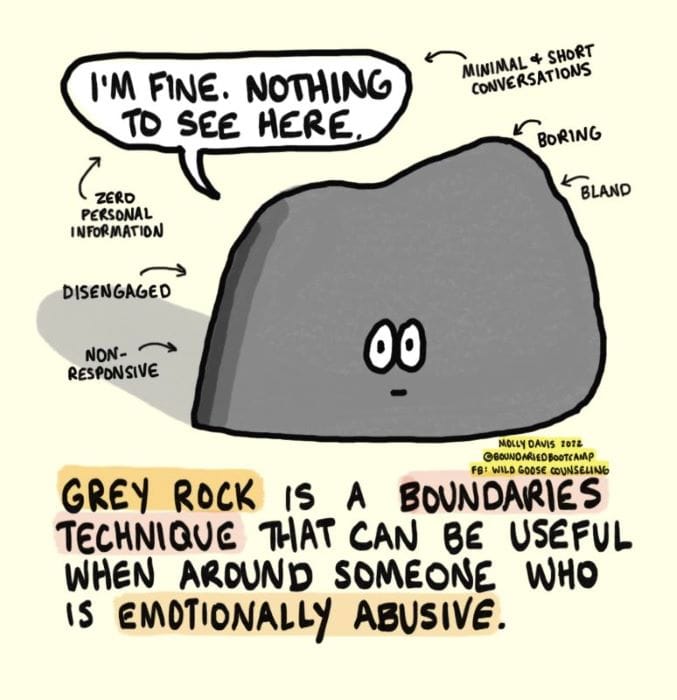
The Grey Rock Method focuses on making yourself uninteresting to the toxic person—not completely invisible, but neutral enough that they lose interest. Think of the movie Pleasantville, where black-and-white scenes contrast with vibrant color. In a similar way, Grey Rock uses subtlety to avoid drawing attention. By staying calm and not reacting, you avoid giving the toxic person any “color” to latch onto, which weakens their attempts to provoke or control you.
Goals of the Grey Rock Method
The main goal of the Grey Rock Method is to reduce emotional reactions from the toxic person. By limiting how much you engage emotionally, you protect your mental health and create space from their negativity. This method isn’t about shutting down your feelings; it’s about staying in control of your emotions and maintaining your peace.
Grey Rock vs. Yellow Rock
Grey Rock works best in casual or short-term relationships—like friendships or dating—where you can avoid giving the toxic person attention without needing to be overly formal. But in more serious relationships, like co-parenting, especially if family court is involved, the Yellow Rock Method is often a better choice. Yellow Rock keeps things calm and professional, blending neutrality with politeness to avoid conflict or misunderstandings in more formal situations. Both methods protect your peace: Grey Rock makes you less interesting, while Yellow Rock keeps you neutral and polite when you need to stay professional.

How to Implement the Grey Rock Technique
Step-by-Step Guide
Step 1: Identify Toxic Behaviors
First, recognize the toxic behaviors in your relationships. This awareness is essential. For example, you might notice someone who constantly belittles you or tries to make you feel guilty. By acknowledging these behaviors, you can better prepare your responses and protect your peaceh and emotional well-being.
Step 2: Practice Emotional Detachment
Next, focus on keeping a calm attitude. When the toxic person tries to provoke you, try to separate your emotions from the situation. Picture yourself as a grey rock—solid and unaffected by their words or actions. This may feel awkward at first, but over time, you will find it easier to stay composed. I recommend taking a deep breath in, holding it for a few seconds, and then releasing it. This simple act can help reduce feelings of anxiety.
Step 3: Limit Personal Sharing
When you start using the Grey Rock Method, try to keep your conversations shallow. Avoid sharing personal details, feelings, or opinions that the toxic person might use against you. Instead, talk about neutral topics like the weather or current events. This way, you can keep things calm and protect your peace.
Step 4: Respond with One-Word Answers
When dealing with a toxic person, respond with short, neutral answers. For instance, if they ask how your day was, you can just say, “It was fine.” By keeping your responses simple, you lower the chances of the situation getting worse and keep the conversation dull.
Maintaining Consistency
Staying committed to the Grey Rock Method is important for it to work. At first, you might find it hard to detach emotionally, especially if you’re used to interacting with the toxic person. However, being consistent is crucial. If you make a mistake, don’t be too hard on yourself. Instead, simply refocus and keep using the technique.
When Grey Rock Isn’t Enough
Recognizing When to Walk Away
While the Grey Rock Method can be helpful, there may be times when it isn’t enough. If you notice that the toxic behavior continues even after your efforts, it’s important to rethink the relationship. Look for signs that show the relationship is too harmful to keep. Remember, your well-being should always come first. It may be time to walk away and establish no contact.
Seeking Support
Don’t hesitate to reach out to trusted friends or professionals. Talking about your experiences can give you new insights and encouragement. Consider joining a support group to share your story and hear from others who have been in similar situations. Resources like books and therapy can also offer valuable tools for navigating toxic relationships.
Personal Growth through the Grey Rock Method
Building Resilience
Using the Grey Rock Method can help you build personal strength and independence. By distancing yourself from the emotional chaos of toxic interactions, you start to reclaim your power. Over time, you will notice that your confidence grows and you develop a better understanding of your self-worth.
Transforming Your Energy
As you use the Grey Rock technique, start shifting your energy away from the toxic person and toward self-care and recovery. Engage in activities that promote healing, such as yoga, meditation, journaling, or prayer and Bible study. Surround yourself with supportive friends who lift you up, and explore hobbies that bring you joy. This change isn’t just about managing a toxic relationship; it’s about improving your life as a whole.
Conclusion
In conclusion, the Grey Rock Method is a useful tool for anyone facing toxic people. By becoming less interesting and emotionally distant, you can protect your well-being and take back control of your life. It’s important to realize when a relationship becomes too harmful and to ask for support when you need it. Remember, you deserve to thrive in a healthy environment, free from toxic behaviors. Embrace the Grey Rock technique and take the steps needed to reclaim your peace and happiness.