Quick Links

Wind Haven Foundation

Intentional Dating: Finding Love That Lasts in the World

Intentional Dating
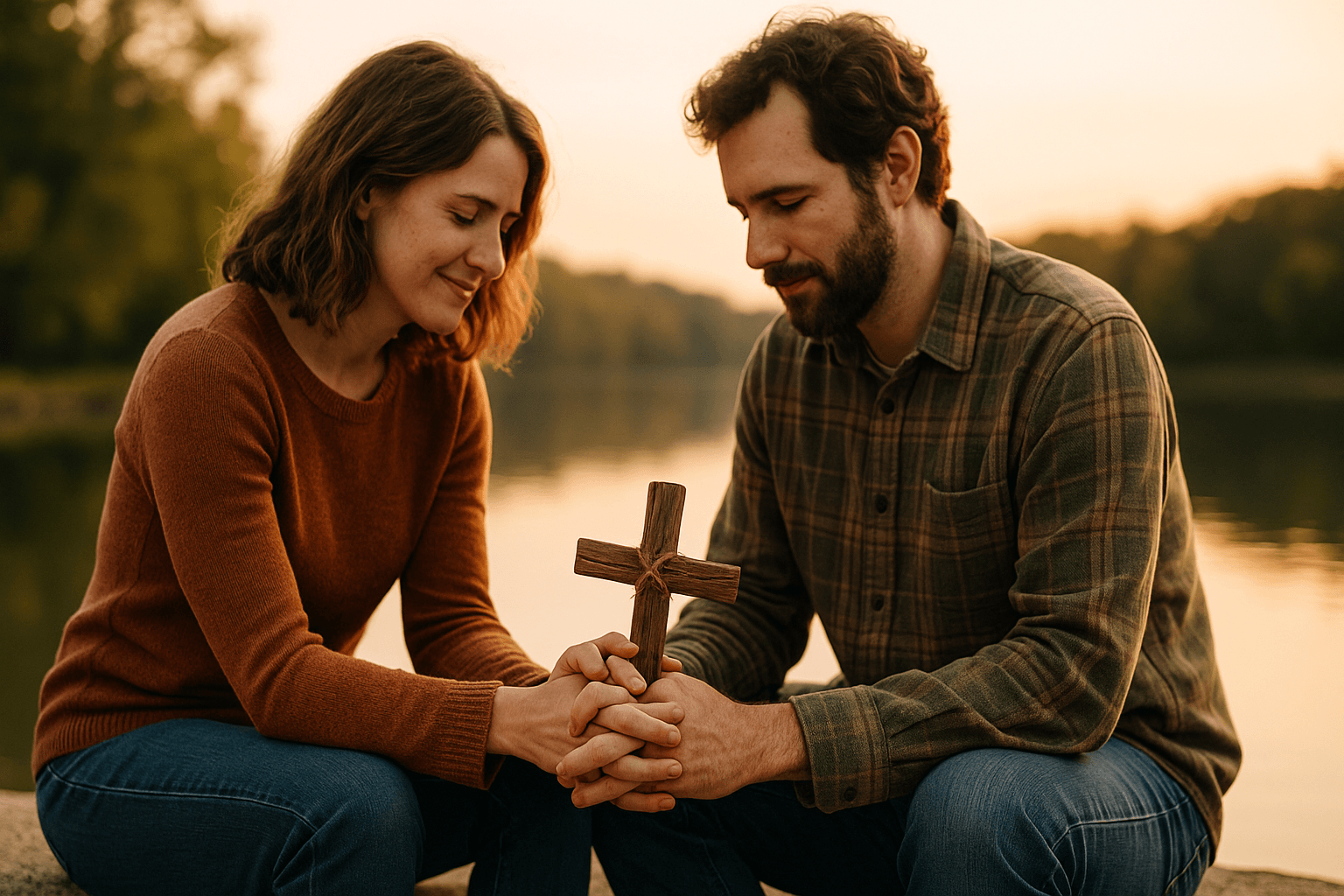
Learn the art of intentional dating. Discover how to build healthy, loving relationships rooted in trust, purpose, and spiritual healing.Intentional dating is more than just swiping right and hoping for the best. It’s about pausing the noise, tuning into your values, and learning to recognize a relationship that honors your heart. In this post, we’ll explore what it means to date with purpose, spot the red and green flags, and invite Jesus into the healing process so you can make space for authentic love.

Intentional dating is more than just swiping right and hoping for the best. It’s about pausing the noise, tuning into your values, and learning to recognize a relationship that honors your heart. In this post, we’ll explore what it means to date with purpose, spot the red and green flags, and invite Jesus into the healing process so you can make space for authentic love.


What Is Intentional Dating?

Intentional dating is dating on purpose. Not just for butterflies. Not just because you’re lonely. It’s:

  • Dating to discover if a person aligns with your values, because you don’t want to date someone you’re just gonna argue with all the time.
  • Setting boundaries from the beginning, because if someone is going to disrespect your boundaries, it’s good to find out early.
  • Taking your time and trusting the process, because like my daddy always said, “don’t get in a hurry, that’s when accidents happen.”
  • Understanding yourself so you don’t get lost in someone else, because if that person overshadows who you are, instead of loving who you are, that’s a potential dumpster fire.


We’re not talking about performance-based dating either. This isn’t “Christian courtship with extra shame.” This is about wholeness, not perfection—the kind of dating where two broken but healing people decide to walk forward together, with God.


Trust Reimagined: Healing After Toxic Love

If you’ve been love-bombed, ghosted, gaslit, or manipulated… yeah, trust is a sore spot. But it’s also a growth spot.

When I met my husband, I was still raw from the wreckage of past relationships. So was he. We were intentional about healing even before we were intentional about dating. It took us five years to walk down the aisle—not because we didn’t love each other, but because we were learning how to love ourselves first.

Some folks meet and marry within a year, and it works. Others need time to unravel old patterns. Time alone doesn’t build trust, but healing does.

So, to start trusting again:

  • Observe your patterns
  • Identify your triggers
  • Dispute the lies you believe
  • Replace them with truth


We call this the OIDR Healing Trinity at Wind Haven.


Healthy Love: What It Looks Like

So, here at Wind Haven, we like to break it down, sometimes Barney style.

A healthy relationship has:

  • Reciprocal Love – You both give and receive, no one-sided effort
  • Mutual Respect – Your voice matters, your boundaries stand
  • Built Trust – Earned over time, not demanded on day one


It’s okay if it’s not perfect—what matters is you can talk about it and work together. Because, for real, if your relationship can’t survive an honest conversation? Red flag.

Not every fast relationship is doomed. Not every slow one is safe. But when it’s not mutual or healthy, it will collapse eventually. You deserve love that lifts, not love that drains.


Our Story: Wrong Turns or Divine Detours?

My husband and I? We were made for each other—but we didn’t get there overnight.

In fact, we both took some messy detours. Mine involved a pregnancy at 19 and a whole lot of toxic theology. Therefore, I thought that I needed a man to survive. So I ran full speed into relationships where I wasn’t seen, heard, or safe. But guess what? God showed up anyway.

I didn’t find love from those men, but I found something better—the love of my children. And over time, the love of a man who saw all of me and chose me anyway.

If we had skipped the heartache? Sure, life would’ve been easier. But would we be who we are now? Would we have our kids? Y’all, maybe those weren’t “wrong turns” at all. Maybe, they were grace-shaped stepping stones.


Intentional Dating for Neurodivergent Hearts

As a neurodivergent minister preparing for my autism assessment, I can tell you this: self-discovery is the first step in intentional dating.

Further, if you don’t know who you are, how can you know what you want?

We don’t do masks at Wind Haven. You don’t have to pretend to be neurotypical to be worthy of love. Your quirks aren’t disqualifiers. They’re filters. The wrong people won’t stick around—but the right one? They’ll see your difference as a gift.

Let yourself:

  • Ask the “weird” questions early
  • Communicate your needs clearly
  • Take breaks when overstimulated
  • Be exactly who God made you to be


You don’t have to fix yourself to be lovable. But being intentional about healing? That’s where the magic happens.


Real Talk: How to Spot a Healthy Relationship

Here are a few real-world signs that you’re on the right track:

Green Flags
  • You feel safe, not anxious
  • They respect your no the first time
  • You can talk about hard stuff without fear
  • You’re both growing together
  • They love your weird (and maybe your cats, even Schroedinger)
Red Flags
  • Constant urgency, pressure to commit fast
  • Guilt trips, blame-shifting, and silent treatment
  • No apologies or ownership of mistakes
  • Dismissive of your feelings or differences
  • They call your boundaries “too much.”


If the relationship feels more like walking on eggshells than walking in peace, it’s probably not it.


Let God Write Your Love Story Through Intentional Dating

You don’t have to rush it. Nor do you have to settle. You don’t have to force what doesn’t fit.

The right relationship will:

  • Honor your healing
  • Protect your peace
  • Grow your purpose


Maybe you’re still waiting. You’re healing from a breakup. Maybe you’re divorced and wondering, what now?

Hear this: You are not behind. You are becoming.

God’s timing may feel slow, but it’s never wasted. Every step, even the ones that felt like a fart in the middle of prayer—awkward but honest—has led you closer to the person God’s shaping you to be.


Explore More on Abundant Relationship Transformation:


Resources for Further Reading:


Intentional dating starts with intentional healing. Whether you’re just starting over, waiting on the right one, or have finally found your person, walk with purpose. Walk with God.

Please drop a comment, share your journey, or explore more resources in our virtual support group. You are more than a conqueror. You’re an Overcomer.

Power Up
Share the Post:

Sign Up or Login to Leave a Comment

Membership Required

You must be a member to access this content.

View Membership Levels

Already a member? Log in here

Tired of Toxic Relationships?

Sign up for our Recovering with Grace newsletter and blog for weekly recovery insights, updates on Wind Haven initiatives, and access to our online survivor support community. Learn how to recognize unhealthy relationship patterns, identify red and green flags, and build healthier connections.

A one-time $10 donation is suggested, with pay-what-you-can access available—no one is turned away.

Related Posts
Abuse Cycle - Domestic Violence Trauma Recovery

Fighting for Victims of Domestic Abuse

Domestic Violence Resources

Download Our Fillable Domestic Violence Bug-Out Bag & Safety Plan Strategy Guide.
Visit our Domestic Violence Resource Page.
For anonymous, confidential help available 24/7, call the National Domestic Violence Hotline at 1-800-799-7233 (SAFE) or 1-800-787-3224 (TTY) now.

Frequently Asked Questions
Contact Form

How can I access “member-only” articles and content? Sign up for our blog subscription, basic membership, or premium membership.

How can I make a donation? You can make a donation on our online donation form. Donations benefit victims of Domestic Violence and are tax deductible.

Which payment methods are accepted? We accept all major credit cards for our premium membership. Donations can be made using a credit card or PayPal. Digital products on our site, IE e-books, can be purchased using a credit card or PayPal. Physical books are sold on Amazon.com, and our merchandise is sold through Printify.

What is your refund policy? Our website accepts donations, and all proceeds from our digital products, books, and merch benefit our nonprofit mission. Therefore, we do not generally provide refunds. For a complete overview of our refund policy, please visit our “Refund Policy” page.

How can I access my account? To access your account, you can visit our quick links menu and select the “Account” link or click below:

My Account

Can I request that you post an article or resource link on your website? YES! You can send us topic requests, or if you have an article you’d like us to consider for publication, you can send it to us in the contact form and put “Article Publication Request” in the subject. If you are a business or organization requesting an article publication, we require a backlink to be placed on your website back to the article our site. If you would like us to consider your website link as a potential resource on our domestic violence search engine, we require a backlink to our site’s resource page which hosts our custom search engine for domestic violence resources. For domestic violence resources to be added to our search engine, please send us a message including the subject: “Resource Link Request.” *All articles and reciprocal links must be content related to domestic violence and other relationship topics on our website. 

How do I submit a speaking request? To request Wind Haven to speak at your next event, please submit the contact form and put “Speaking Request” in the subject field.

To be considered, the Message Field should contain the following:

  1. Date Requested
  2. Time Requested (i.e. From 11AM to 1PM — Time Zone}
  3. Event Location (City/State)
  4. Event Venue Name
  5. Type of Event (Church Service, Conference, Workshop, etc.)
  6. Targeted Audience (General, Singles, Couples, Leaders, etc.)
  7. Organization Name and Organization web site
  8. Primary Contact (Name, Email, Phone)
  9. Any additional details pertinent to your event

Your request will be reviewed and someone will follow up with you.

Contact Us

What Your Donation Supports:

  • General Operations – So we can keep showing up

  • Survivor Support – Peer-mentorship, trauma recovery, pastoral care, & more

  • Survivor Resources – Downloadable eBooks, a comprehensive domestic violence resources database, blogs, toolkits, & more

  • Virtual Recovery Center – Healing courses and content designed by Overcomers for survivors for holistic domestic abuse recovery

  • Bug-Out-Bag List & Safety Planning – Our flagship bug-out-bag list and fillable safety-plan

  • Leadership Development – Training Overcomers to lead

  • Future Initiatives* – Survivor emergency fund and our pioneer nonprofit housing stewardship initiative 


*Survivor Emergency Fund

  • Rent and utility deposit for permanent housing
  • Emergency relocation  
  • Household furnishings
  • Transportation
  • Clothing and personal essentials
  • Trauma-informed therapy
  • Groceries


*Nonprofit Housing Stewardship Fund

  • Safe, healthy, and affordable housing for individuals and families in need
  • Support for those experiencing homelessness or housing instability
  • Maintenance, upgrades, and oversight to ensure long-term habitability
  • Advocacy for fair housing practices and tenant rights
  • Community education to prevent systemic neglect and unsafe living conditions
  • Access to resources that promote stability, security, and opportunity for all
Internet usage can be monitored and is impossible to erase completely.
If you need to exit this site quickly, click the purple sticky exit on the left side of your screen.

If you are concerned about internet security & safety due to abuse, close this screen and clear your history, cookies, and browser cache. You can re-open our website in a secure location in a private browser window. 

Safe computers can be found at your local library, Internet cafe, shelter, workplace, or computer technology center; avoid using shared computers when researching things like travel plans, housing options, legal issues, and safety plans.